


The past, replayed
A conversation that ended hours ago is still running in your head.


Couldn't load pickup availability


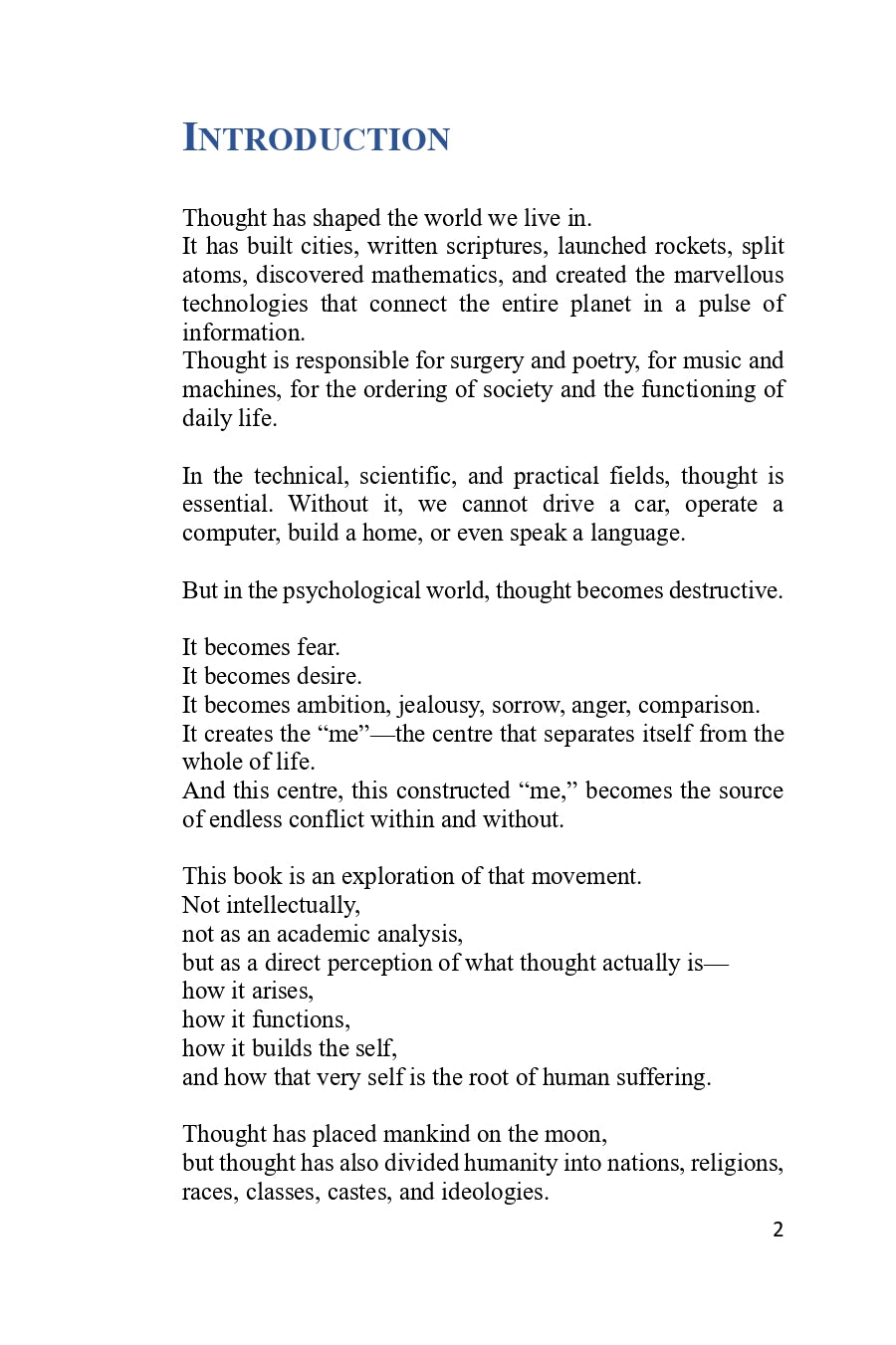

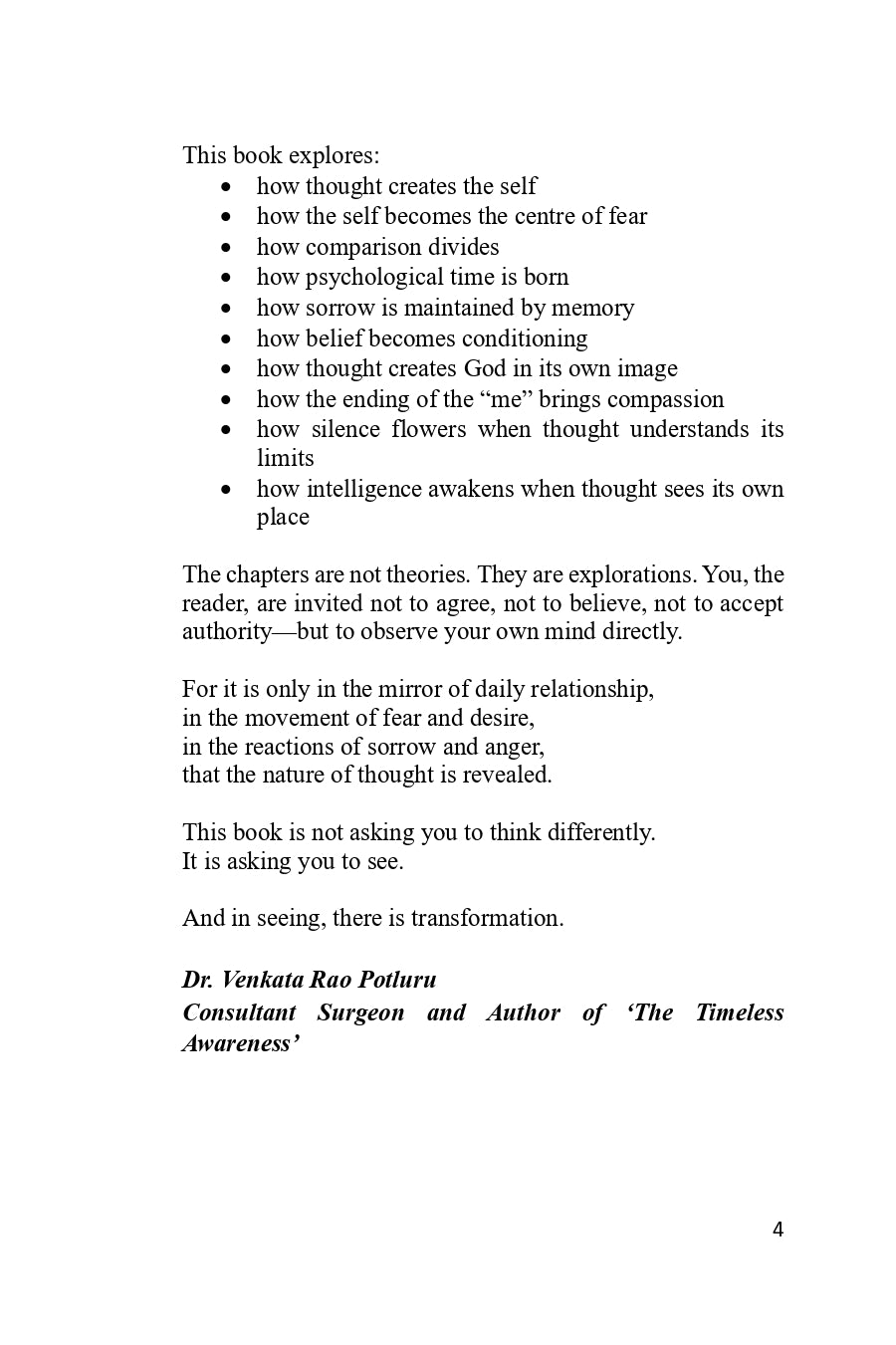
A look inside


Swipe to explore all 15 pages
A QUESTION WORTH EXPLORING
We replay old conversations. Worry about a future that hasn't happened. Compare our lives with others.
But have we ever questioned the thought behind it all?
In this 206-page exploration, Dr. P.V. Rao examines how thought, memory, fear and the sense of "me" shape our lives, and what it means to observe the mind without trying to control it.
Drawing on over four decades of experience as a surgeon and his engagement with the teachings of J. Krishnamurti, he invites readers to question what they have long taken for granted.
INSIDE THIS BOOK, EXPLORE
Why thought is essential in everyday life but can create inner conflict.
How memory, comparison and fear shape our sense of self.
What it means to observe the mind without judgment or resistance.
A familiar inner movement
The book asks us to look closely at the everyday movements through which thought shapes our experience.
A conversation that ended hours ago is still running in your head.
You measure your life, achievements or identity against someone else's.
The mind keeps projecting into a tomorrow that has not happened.
Thought moves between desire, resistance, fear and the need to become.
Clarity begins when we simply observe.
INSIDE THE BOOK
From understanding the mind's conflicts to discovering the possibility of inner freedom.

01 / THE BEGINNING
Discover how thought, while essential to everyday life, can become a source of fear, comparison and conflict when it shapes our inner world.

02 / LOOK CLOSER
Explore how memory, fear, desire and belief shape our sense of self — and how this constructed identity becomes the centre of division and suffering.

03 / THE TURNING POINT
What if freedom does not come from controlling thought, but from seeing it clearly? Explore the possibility of awareness without judgment.

04 / WHAT UNFOLDS
Discover what may emerge when the psychological self falls silent: peace, compassion, intelligence and a different way of living.
This is not a book asking you to think differently. It is an invitation to see.
The details
A digital book in English, published in 2025.
 Dr. Venkata Rao Potluru, M.S.
A LIFE OF MEDICINE. A LIFETIME OF INQUIRY.
Before you begin
A little clarity before you decide to read.
You are invited to explore how memory shapes your identity, how comparison creates insecurity, how past hurt continues to influence you, and how the psychological idea of “me” becomes a centre of conflict. The book encourages you to observe your own mind rather than simply accept someone else's conclusions.
The book does not reject thinking altogether. It makes a powerful distinction: the mind is essential for science, work and everyday functioning, but becomes destructive when it fuels psychological fear, jealousy, comparison, ambition and conflict. The question is not whether we should think, but whether we understand how our minds influence us.
No. It challenges the assumption that thinking can solve every psychological problem. Rather than offering techniques to control, suppress or replace thoughts, the book explores choiceless awareness: observing the movement of the mind without judgement, resistance or justification.
This book questions something most of us rarely examine: the very instrument through which we experience life. Across 206 pages, Dr. Venkata Rao Potluru explores the nature and limitations of the mind, the psychological “me”, fear, sorrow, peace and the flowering of compassion. It is an invitation not merely to think differently, but to see differently.

THE COMPLETE TWO-BOOK READING JOURNEY
ONE QUESTION LEADS TO ANOTHER
What creates inner conflict? Why do fear, comparison and old memories keep shaping our lives?
The first book invites you to question these patterns. Thought Ends, Freedom Begins continues the inquiry, exploring what it means to live with greater awareness and freedom.
Read both together. Explore the questions from where they begin to where they may lead.